IntraCubic:
Installation in Mellish Clark cube, Anglia Ruskin University. 02/04/14.
Alluding to the gap between performance and viewing – particularly the theatrical aspects of media engagement. The user opts into an agreement with the media that relies upon their prior knowledge of what it is, and what it is typically used for. By creating an installation space, the viewer is brought within the sphere of creation, and are as active in the production as they are in the consumption of the artwork – something which then calls for a repeated production in the spirit of the regenerative, reproducible media being used.
The installation, as well as the viewer, is inherently temporal – both must progress one way or another – yet the media itself is static. The interaction permits the audio to become visual, and the visual to generate rhythms similar to those in music. Structures of time that allow the person to navigate them as spatio-temporal entities. It does not ‘move’ per se, rather people move around it, alluding to a movement that never actually happens.
 Human projection of sequence and chronology upon the media enable some form of narrative structure to form introspectively, whilst the media itself may remain in continual flux. Because of the way in which human cognition works, it seems that dealing with this as anything, humans will come from what Jackie Hatfield refers to as a ‘narrative place’.
This piece demands the viewer to reconsider what is happening in regards to the media fulfilling its obligation as the resolver of technical issues stemming from human needs and enquiries. The need for a resolution or conclusion to form from the visual and audial progression perceived becomes both frustration and impatience. Conversely it may lead the viewer to abandon their concept of sequential/narrative-based understanding and seek a more meditative approach.
The role of sound – particularly noise – in this installation environment is important in the considering of what it is to perceive duration (in the Bergsonian sense) when visually we are greeted with anti-narrative stimulii. The pieces installed all focus the viewer’s attention equally on the produced experience and the equipment that is producing it. The hardware are perceived as almost sculptures in their own right, occupying not only a space and time, but also an expectative definition that is both emotionally and cognitively charged.
Notes on Augmenta:
IntraCubic installation Phase 1
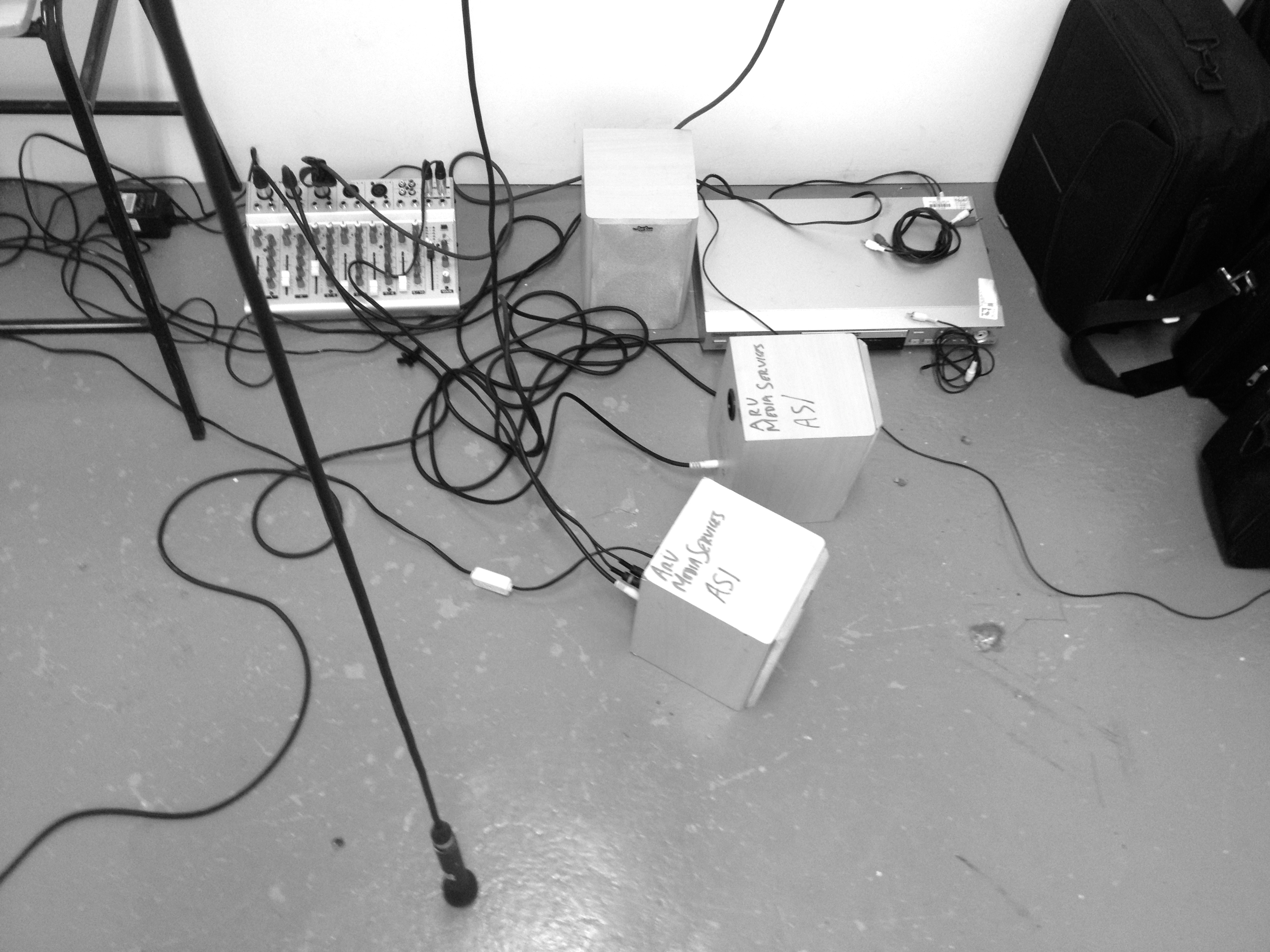 Revealing the equipment that is usually visually suppressed by its end product, often taken for granted, and in translating it into a more sculptural aesthetic point of engagement, one is confronted with both source and ending.
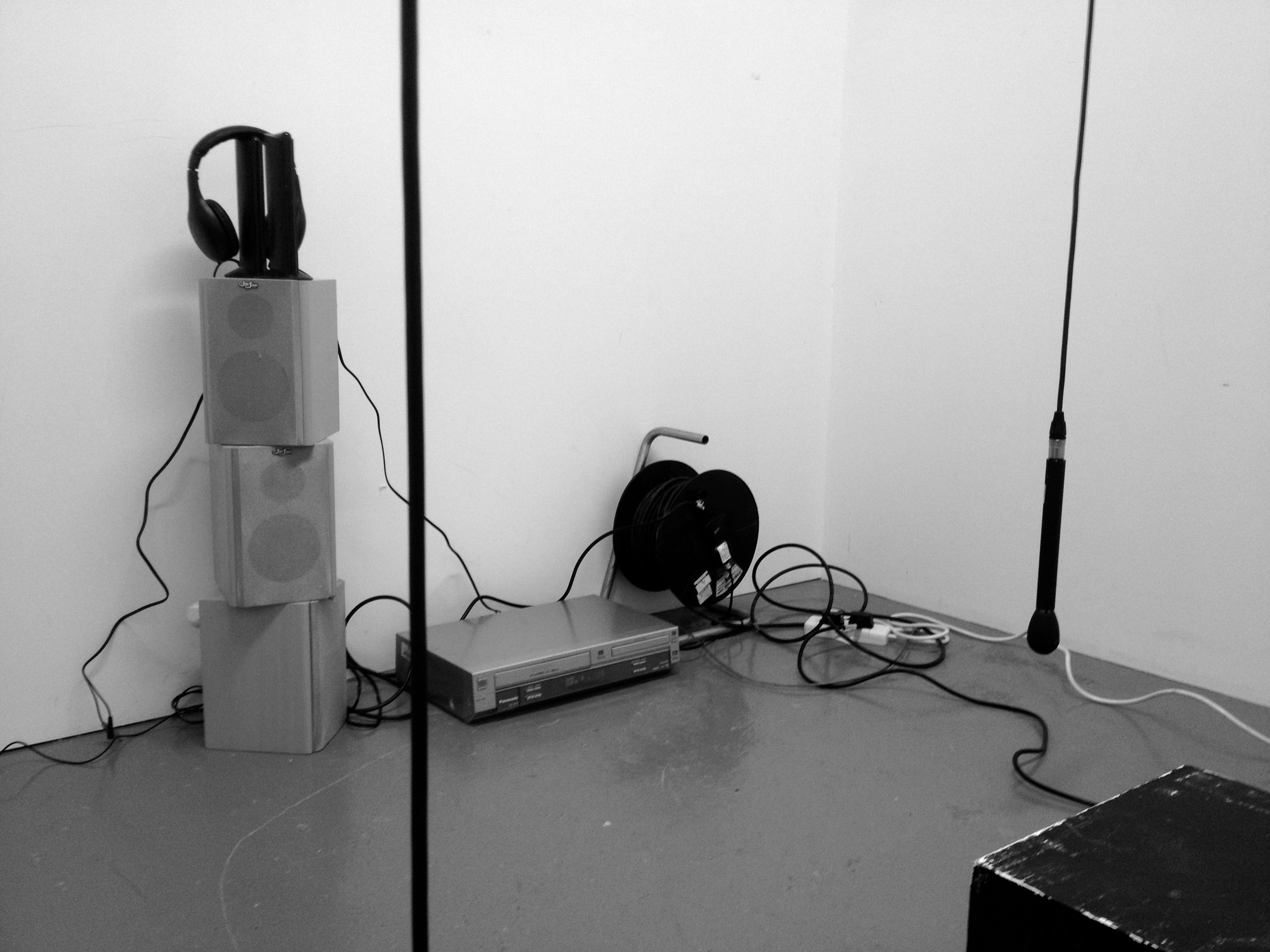
Though neither are fulfilling their outright purpose (one because of its lack of phenomenological space, narrative structure and perceivable duration – the other because it cannot be suppressed by its end product in a way which disguises or overlooks the source of the media output). The interference on all sides comes from the ‘user’… Their presence disrupts.
 David Testill